
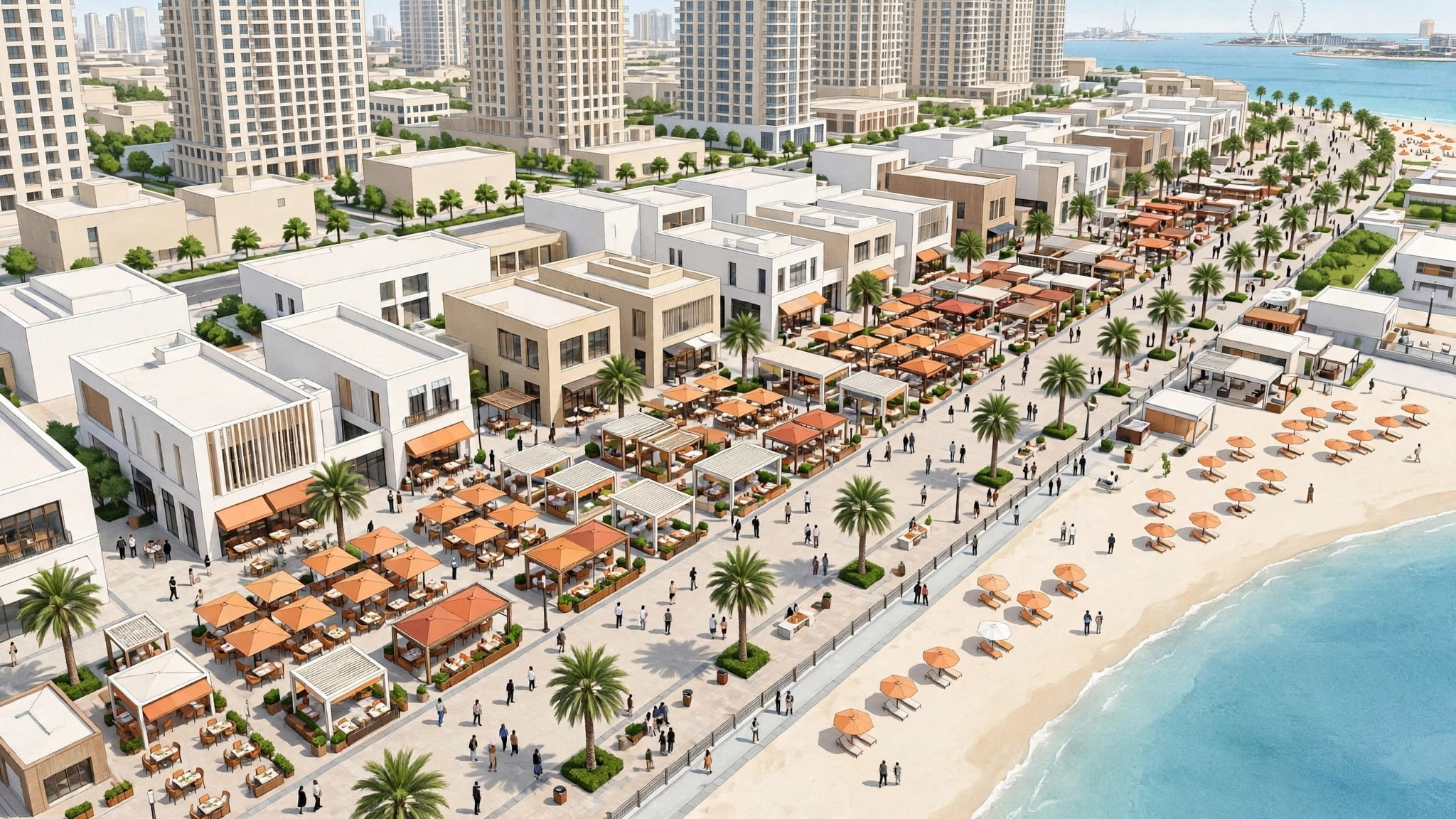
Walk down The Walk on a Friday evening and every table is full. Walk the same stretch on a Monday afternoon in August and half of them are empty. Same restaurant, same menu, same food — completely different revenue. In hospitality, the cook matters less than the crowd.
When people imagine investing in a restaurant, they picture the chef, the menu, the reviews. Operators think about something far less glamorous: how many people pass the door every hour, and how many of them stop. In a location-driven market like JBR, footfall is the single biggest driver of revenue, and it is also the thing a menu cannot fix.
Why footfall dominates the P&L
A restaurant's costs are largely fixed: rent, staff wages, licences, fit-out depreciation. Whether you serve ten covers or a hundred, most of those costs are already committed. That means revenue swings land almost entirely on the bottom line. A 20% change in covers can be the difference between a healthy month and a loss-making one.
This is why two identical restaurants in different locations earn wildly different returns. The variable that changes between them is not the food. It is the flow of potential customers.
What drives footfall on The Walk
Several layers stack up to create JBR's crowds:
- Resident density: tens of thousands of people live within a short walk, and residents eat near home on ordinary weekdays.
- Tourist arrivals: hotel guests and holiday rentals fill the area seasonally, creating the peaks operators count on.
- Events and weekends: public holidays, festivals, and fine weather pull day-visitors from across Dubai.
- The promenade effect: The Walk is designed for strolling — foot traffic passes restaurant fronts by design, not by accident.
Each layer has its own seasonality and its own fragility. An investor should understand all four before forming any view on a hospitality asset's income.
The conversion question
Footfall only matters if a share of it converts. Operators call the share of passers-by who become customers the capture rate, and it is shaped by things the investor can actually assess: visibility of the frontage, the terrace, the price point relative to neighbours, and the speed of service during peaks.
A venue with great footfall but poor conversion is leaving money on the pavement. A venue with modest footfall but excellent conversion may earn more, more consistently. When you read a project's numbers, ask how management describes both sides — traffic and capture — not just one.
Seasonality is a feature, not a bug
Summer in Dubai is slow for outdoor dining. That is normal, priced in, and planned for. Experienced operators use the quiet months for maintenance, staff training, and menu development, and they hold cash reserves to bridge the gap. The red flag is not seasonality — it is a business plan that pretends seasonality doesn't exist.
When we evaluate hospitality projects, we look for honest seasonality assumptions in the projections. A forecast that shows flat monthly revenue for a JBR restaurant has not been near a JBR restaurant.
What this means for you as an investor
You do not need to become a restaurant expert. But before you form a view on a hospitality asset, ask:
- Where does the traffic come from, and how does it change through the year?
- What share of passers-by become customers, and what drives that rate?
- How does the plan handle the slow months — reserves, reduced hours, or crossed fingers?
Food quality keeps customers coming back. But footfall decides how many walk past in the first place — and that is what you are really investing in.
Capital at risk. Educational content, not financial advice.
See the journey live.
Tour the demo investor portal — reservations, payments, register.
Play portal demo