
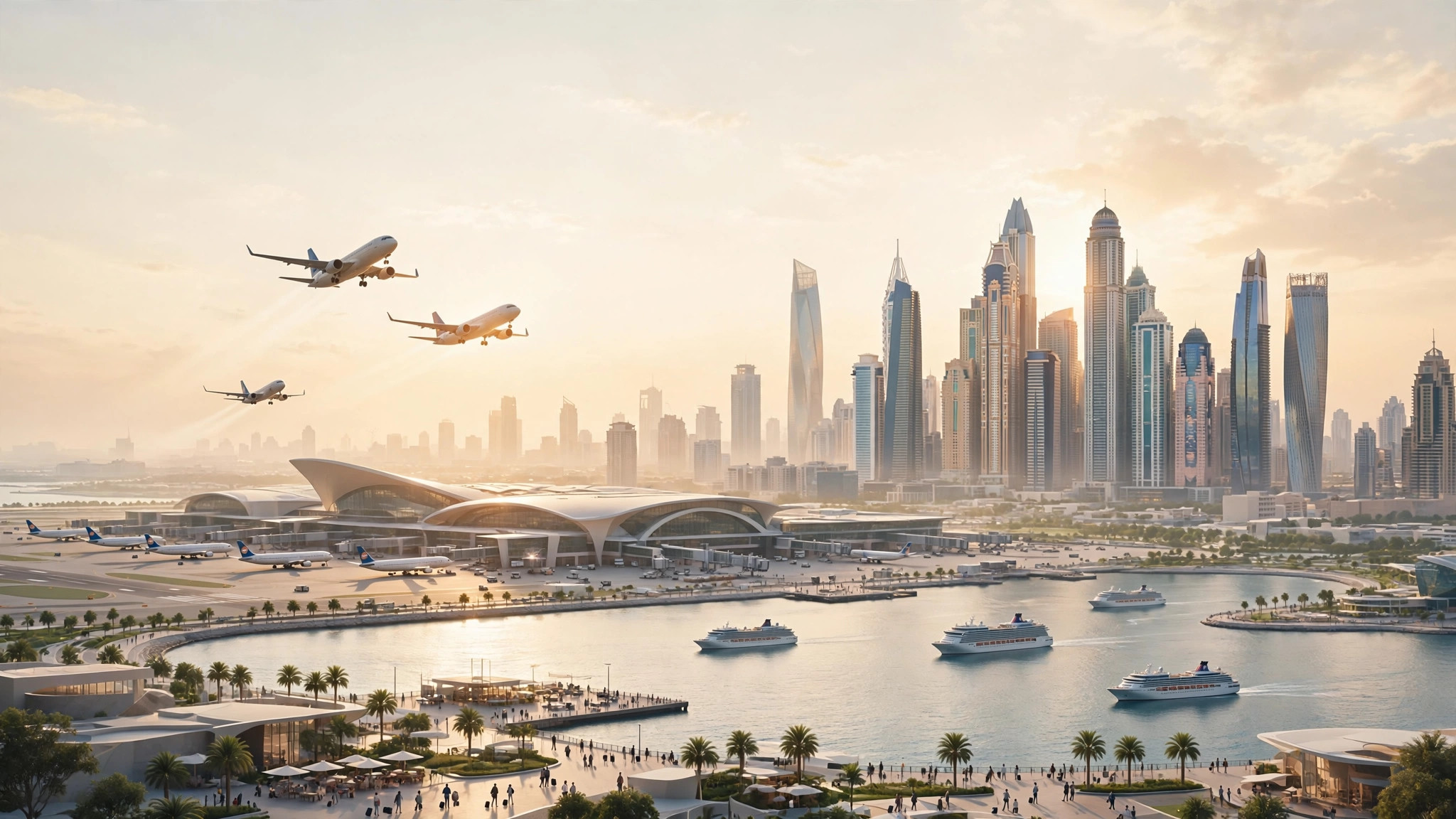
Governments across the Gulf have set some of the most ambitious tourism targets in the world. For anyone considering a hospitality asset — a restaurant, a yacht, or a hotel-linked property — those targets are the backdrop behind every revenue projection.
Understanding what the targets actually promise, and what they don't, is the difference between informed investing and buying a story.
What the headline targets say
The region's national tourism strategies are public and explicit. Saudi Arabia is targeting 150 million visitors a year by 2030 under Vision 2030. The UAE's Tourism Strategy 2031 aims for 40 million hotel guests annually and a sector contribution of AED 450 billion to GDP. Dubai's D33 economic agenda targets the same 40 million hotel-guest figure by 2033, alongside doubling the size of the economy. Qatar, off the back of the 2022 World Cup, continues to build its calendar of conferences, sporting events, and cruise calls.
These are policy goals with budgets behind them: airports, airlines, visa reform, events, and destination marketing. They describe direction, not certainty.
How targets translate into asset income
Tourism targets matter to hospitality assets through a simple chain:
- Visitor growth → room nights and covers. More arrivals widen the pool of hotel guests, restaurant diners, and charter clients.
- Events calendars → peak-season pricing. Conferences, exhibitions, and sporting events create demand spikes that lift rates.
- Connectivity → seasonality relief. New flight routes spread demand across months that were once dead.
- Regulatory reform → supply confidence. Visa simplification and licensing reform reduce friction for operators.
For a yacht in a hotel partnership or a restaurant in a tourist district, the tourism strategy is the demand engine. That is why hospitality projections almost always cite it.
What the targets don't tell you
Targets are national; income is local. A country can hit its visitor target while a specific marina, district, or hotel underperforms. Three cautions belong in every hospitality investment analysis:
- Supply is growing too. Hotel pipelines, new restaurants, and new charter operators compete for the same visitors. Demand growth that merely keeps pace with supply leaves rates flat.
- Seasonality survives. Summer in the Gulf will always be slower for outdoor hospitality. Annual targets smooth over monthly realities — your cash flow doesn't.
- Visitor mix matters more than visitor count. Ten million transit passengers don't dine like ten million resort guests. Ask which segments an asset actually serves.
Questions to ask before you invest
When a hospitality project cites tourism targets in its marketing, ask: which specific demand source feeds this asset? What does the asset earn in the weakest month, not the average one? How much new supply is arriving nearby in the next two years? Honest answers separate genuine opportunity from target-based storytelling.
Capital at risk. Educational content, not financial advice.
See the journey live.
Tour the demo investor portal — reservations, payments, register.
Play portal demo